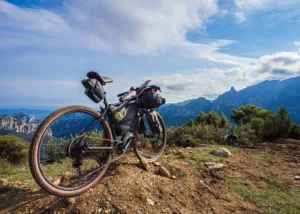
DL Slow – Serra d’Irta Loop
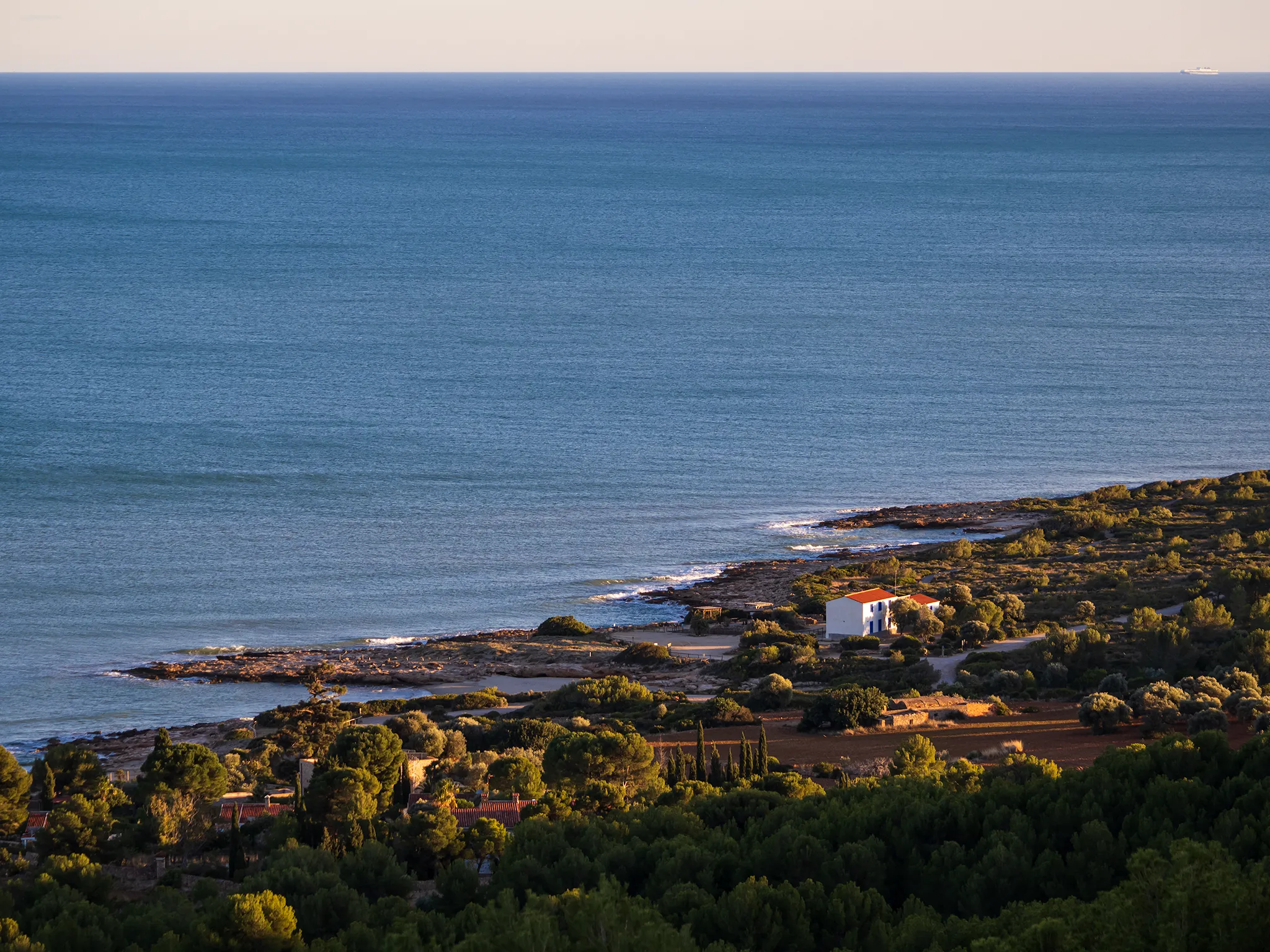
The Baix Maestrat opens towards the Mediterranean, where fields, villages and light shape the landscape. A varied and gentle loop that blends inland paths and coastal stretches, weaving through farmland tracks, pine forests and sections by the sea.
- Distance (km): 173 km
- Elevation gain (m): 1956 m
- Surface: Asphalt 22% / Gravel 75% / Trail 3%
- Location: Baix Maestrat
- Natural areas: Serra d’Irta Natural Park
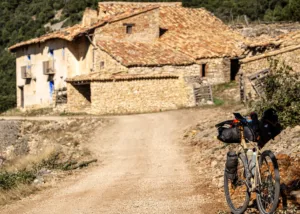
As the landscape begins to open towards the Baix Maestrat, something changes in the way you pedal. The mountain ranges gradually lose height and give way to a broader territory, shaped by the patient work of the land. Villages appear among the fields, with bell towers rising above low rooftops and squares that still retain the pulse of old markets. Here, the route moves between history and agriculture, accompanied by a more generous horizon and a light that wraps everything in its glow.
Sant Mateu presents itself as a natural crossroads, with its Gothic church dominating the centre and a main square that has been a meeting place for centuries. Further on, La Salzadella and Santa Magdalena de Pulpis preserve that serene character of inland villages, where the passage of time is measured more by harvests than by calendars. Pedalling is calm and steady, allowing you to observe how the landscape gradually transforms without abrupt changes.
Little by little, the air begins to change. The bicycle approaches the Serra d’Irta Natural Park, a space where the mountains stretch out until they touch the sea. As you enter the natural park, the terrain becomes rougher and more authentic. The tracks wind through low pine forests, hidden coves and stretches of coastline where the Mediterranean Sea suddenly appears, clear and open. Here there are no major infrastructures or artifices—only stone, forest and water sharing the same space.
Riding alongside the sea has something hypnotic about it. The sound of the waves keeps time with the rhythm of the wheels, the scent of salt blends with pine resin, and the silhouette of the Castle of Xivert watches from above, reminding us that these lands were a frontier for much of their history. It’s a stretch made for slowing down, for letting your gaze drift between the blue of the horizon and the irregular shapes of the coastline along the Mediterranean Sea.
Further north, Peñíscola rises from the rock like a natural extension of the landscape. Its old town, perched above the sea, invites you to stop and wander slowly through cobbled streets that still echo with other times.
The Castle of Pope Luna stands watch from above, firm and silent, while the sea surrounds the city on almost all sides.
The return begins by following the line of the Mediterranean Sea. For several kilometres, pedalling runs alongside the beach, with the water on one side and the town on the other, in a gentle passage that invites you to enjoy the moment without haste. As the route leaves the coast and heads back inland, the agricultural landscape takes centre stage once again. Twisted olive groves and rows of orange trees form a shifting mosaic that colours the road in greens and ochres depending on the season.
The Serra d’Irta Natural Park loop comes to an end among cultivated fields and the nearby presence of the sea. The coast is left behind, but not its influence: the light remains open, the air keeps a hint of salt, and the pedalling settles into a gentler terrain. It’s a calm ending, without excess, leaving the feeling of having crossed a land where the mountains learn to live alongside the Mediterranean Sea, and where slowness is not imposed, it simply happens.
- Millenary Olive Trees
- Xivert Castle
- Argilaga Cove
- Pebret Beach
- Peñíscola Marshlands
- Font de la Salut Hermitage
Within the Serra d’Irta Natural Park there are no water sources. It is advisable to carry enough water when leaving Peníscola or Alcossebre.
The Serra d’Irta is a protected area. Always ride on authorised paths and respect the environment so that this landscape can remain one of the few untouched stretches of Mediterranean coastline.
Along the route you will find fountains and small villages where you can refill water or get something to eat. Even so, it is wise to plan ahead and take advantage of these stops to resupply.
The Serra d’Irta is one of the few sections of Mediterranean coastline that has remained free from urban development. Between Peníscola and Alcossebre, sea and mountains coexist with hardly any interruptions, forming a rugged landscape where rock, wind and light set the rhythm of the journey.
Along the way, small coves, cliffs and defensive towers appear, reminders of the maritime past of this coast. On clear days the horizon opens wide over the Mediterranean and, in the distance, the Columbretes Islands can be seen.