


In mid-2019, I came across a text online that sparked a deep curiosity in me:
In February 2020, I bought a plane ticket to Berlin with the intention of riding the route. I had a friend living there, and for logistical reasons, it made more sense to start from the capital. A month later, the world turned upside down, and the trip was put on hold.
It took two years before I was finally able to ride the Trans Germany. That waiting time allowed me to review and adjust the track I had originally created, since my first idea was to finish in Savona and take a ferry to Barcelona. In the end, I discarded that plan and decided to extend the Swiss section to cross the Alps and finish in Lyon. It turned out to be the right choice.
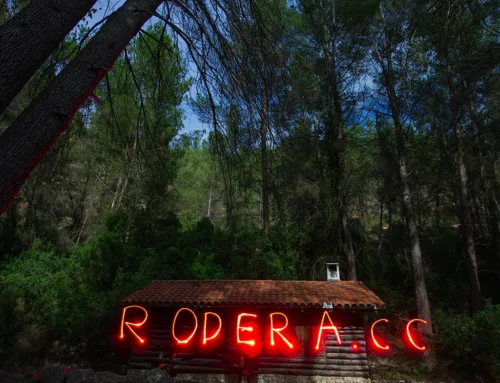
It was twelve days and twenty-one hours crossing through the wildest parts of Germany. I had never spent so much continuous time surrounded by forests. At some point, I lost track of the days: I camped wherever dusk found me, following the rhythm of the sun. I briefly ventured into Poland and the Czech Republic, crossing old border posts that still seemed to echo another time.
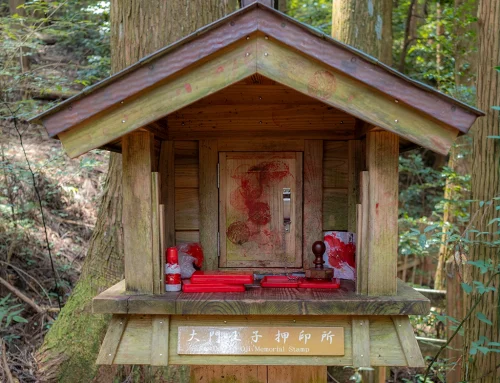
That Germany seemed fascinating to me. In many areas, people didn’t speak English (perhaps because they weren’t tourist spots), which made it feel even more authentic. At that time, wolves (I suppose as a consequence of the pandemic) were repopulating the border forests, and the nights, dense and full of sounds, were a gift. I came across barely three other bikepackers like myself, and very few cyclists or hikers. Instead, I found countless traces of old campfires, signs of a living, almost ancestral connection with nature. There were also immaculate shelters for spending the night and, deep in the woods, cupboards stocked with emergency food or drinks… even tools like axes.
It’s a route I would recommend to any bike traveler who rides adrift. The sense of immersion in nature (and in oneself) is complete, rarely experienced with such intensity on my other journeys.
Spain also offers a nature of immense richness and diversity, but the Trans Germany has its own character: endless kilometers of continuous forest, a humid and serene atmosphere that invites you to drift along, without direction or haste.
If you’d like to complement this experience visually, I invite you to discover its Visual Story on Deriva Lenta. And if your curiosity is piqued and you’d like to learn more about this route, I recommend visiting their website (https://www.baselona.de/) You can also find my full track on Wikiloc.
My Trans Germany ended up stretching to 2,166 kilometers, with a total of 24,542 meters of elevation gain, because once I reached Basel I decided to keep pedaling through Switzerland. But that’s another story.
While writing these lines (in 2025), I came across an update on Bikepacking.com:
“Update: The Bikepacking Trans Germany was revised for the 2023 season, removing several critical sections that posed legal issues. It is now fully rideable. Note that the BTG was originally published in 2016 and was closed in 2021 due to access restrictions.”
Perhaps it wasn’t a coincidence: when the world began to reopen its paths, the Trans Germany did too.

Would you like to follow Deriva Lenta’s journey?
Some Derivas are best told slowly, once the path has had time to settle.
If you feel like accompanying these journeys when they find their moment, the slowletter is a good way to stay the course.


Leave A Comment