


To explain what I mean by being a dual pilgrim, I have to go back to 2017. And, curiously enough, start by talking about a bicycle.
That year I had just bought my first gravel bike, a steel Specialized Sequoia. I was looking for a bike that would basically let me wander the Delta: ride around the Ebro Delta, where I was living at the time, without having to decide in advance which way I would take to get back home.
I worked in Tortosa and often commuted there by road bike. The problem was that, on the way back, I always felt like leaving the tarmac behind, slipping between the rice fields and taking a shortcut along whatever track happened to appear. I couldn’t do that on the road bike. With my full-suspension mountain bike, the opposite was true: I could lose myself around the Delta as much as I liked, but I was carrying far too much bike for a simple commute to work.
The gravel bike solved the dilemma.
It brought both worlds together without compromising too much on either.
Not long after buying it, a friend with whom I had walked the Camino de Santiago from Benicarló in 2013 suggested riding the Vía de la Plata. I had a fast bike with no suspension (and very little maintenance to worry about) that was also perfect for loading up with those bags that still seemed rather unusual to me at the time: bikepacking bags.
I didn’t have to think about it for long.
I bought my first bags and returned to the trails of the Camino de Santiago, this time in a completely different way.
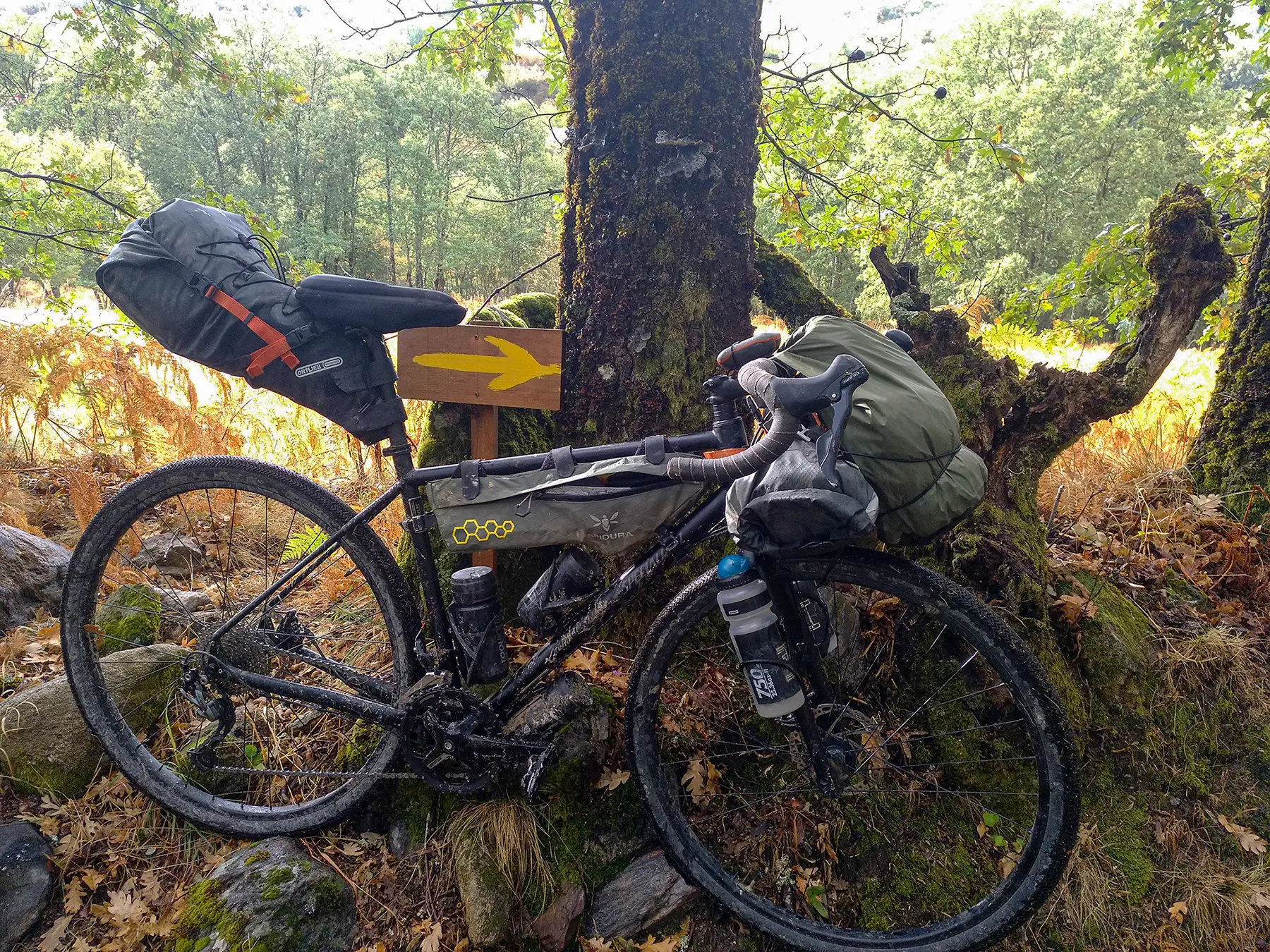
The experience couldn’t have been better.
Back then, you still didn’t see many gravel bikes on the Camino, let alone bikes set up for bikepacking. Some cycling pilgrims looked at that bike, loaded with bags in every possible place, with a certain curiosity. I was discovering something new too: how lightly I could travel with everything I needed distributed around the frame.
And I fell in love with steel.
With the way it flexed, the comfort, that feeling of riding an apparently simple bicycle that could do almost anything. From then on, for me, it stopped being just steel.
It became Valyrian steel.
The Sequoia turned out to be perfect for a route like the Vía de la Plata. Beautiful tracks, fast and clean trails, and kilometre after kilometre of a Camino that was already exceptional in its own right. Seville, Mérida, Cáceres, Salamanca, Zamora… cities I especially enjoyed for how much of their past they still preserved, and, between them, an almost endless succession of small villages that made the journey incredibly enjoyable.
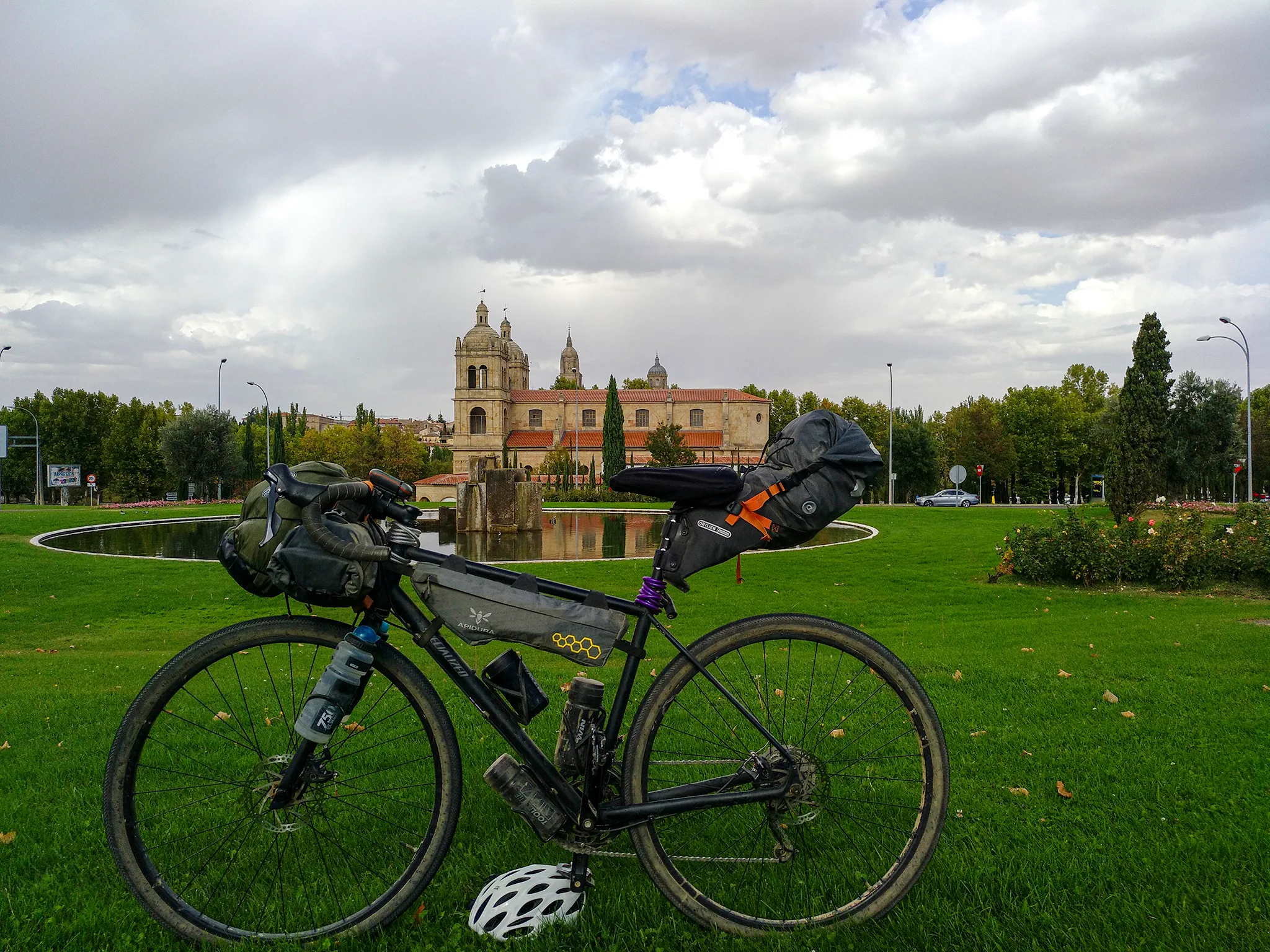
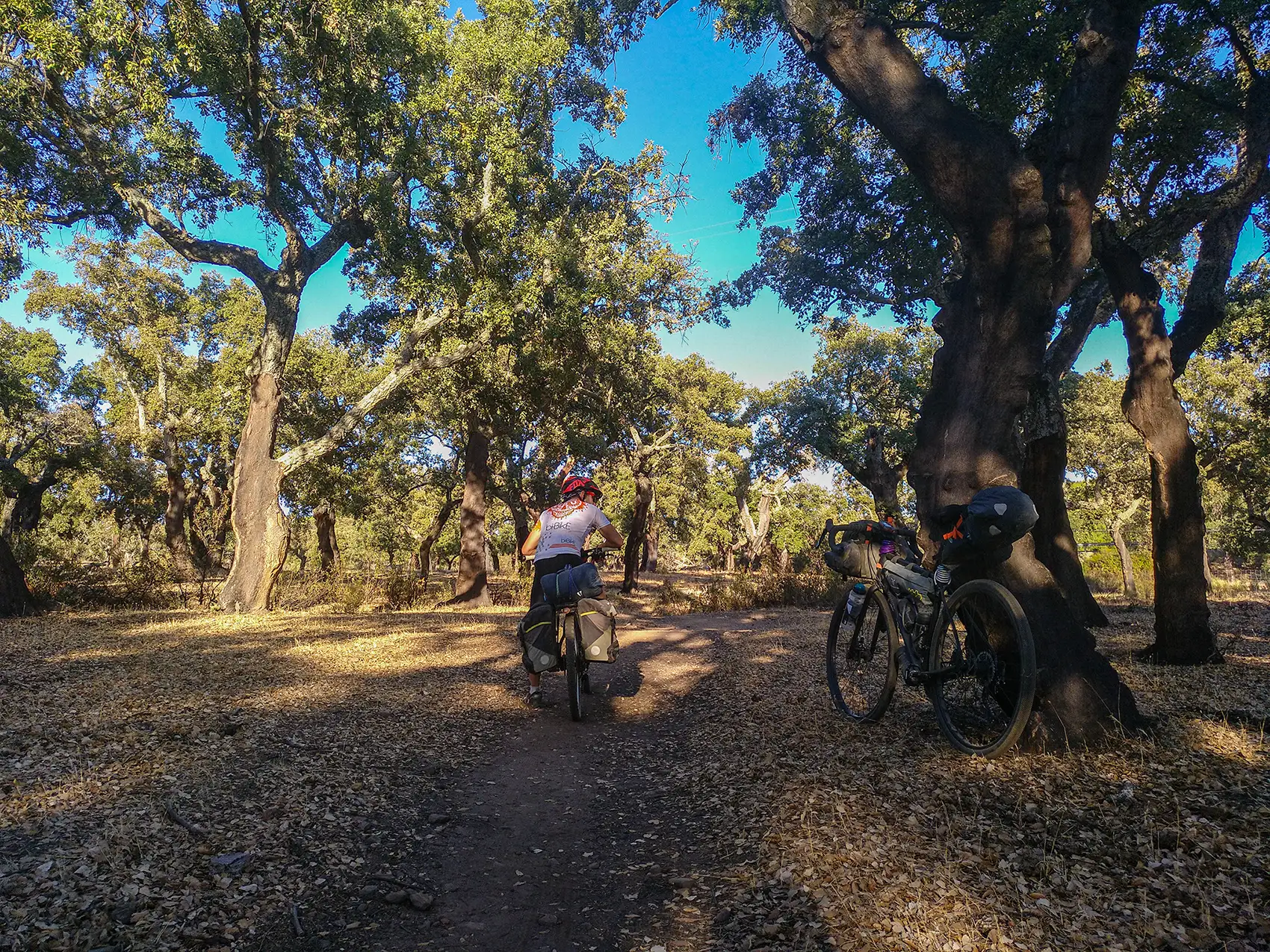
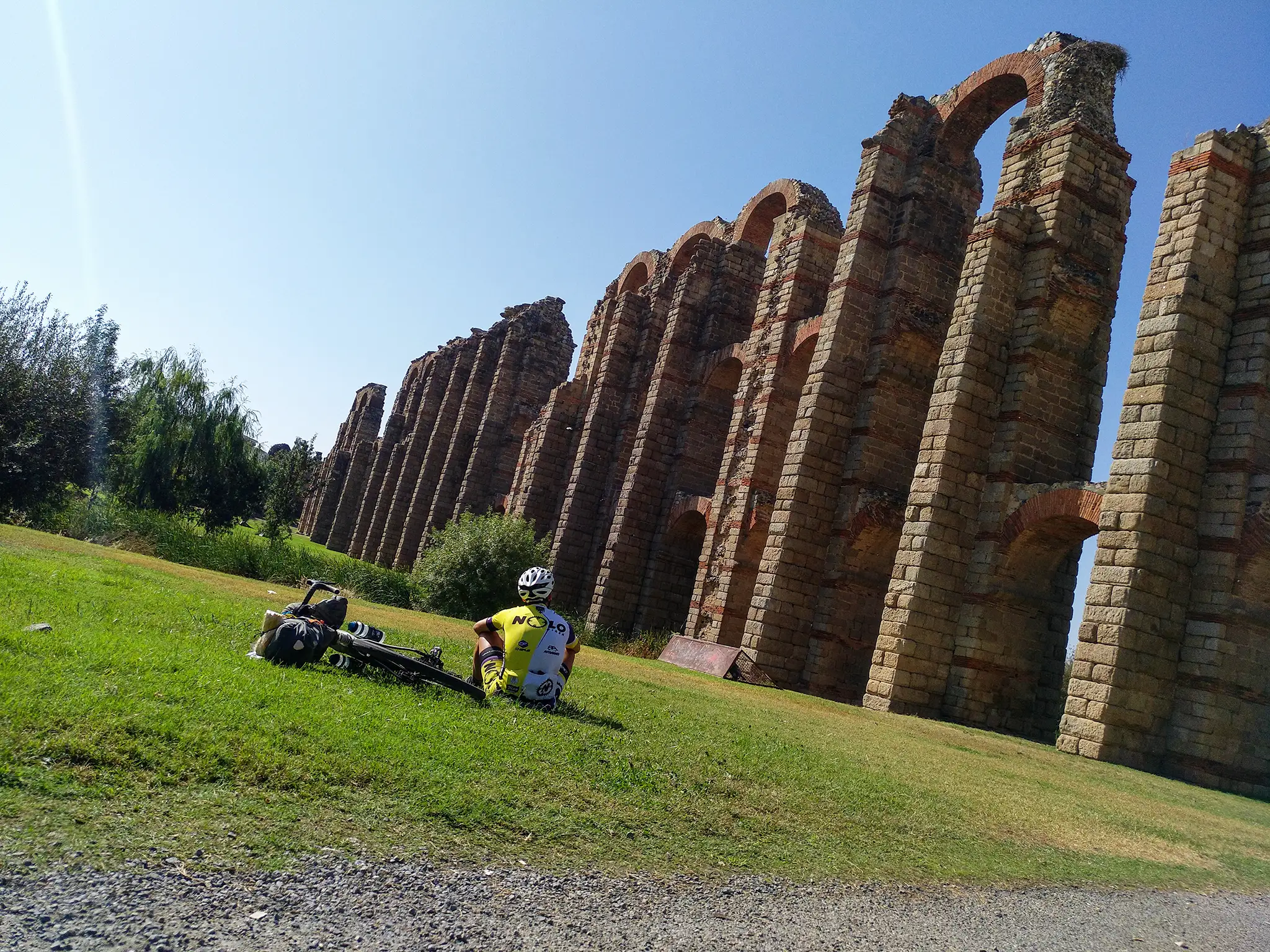
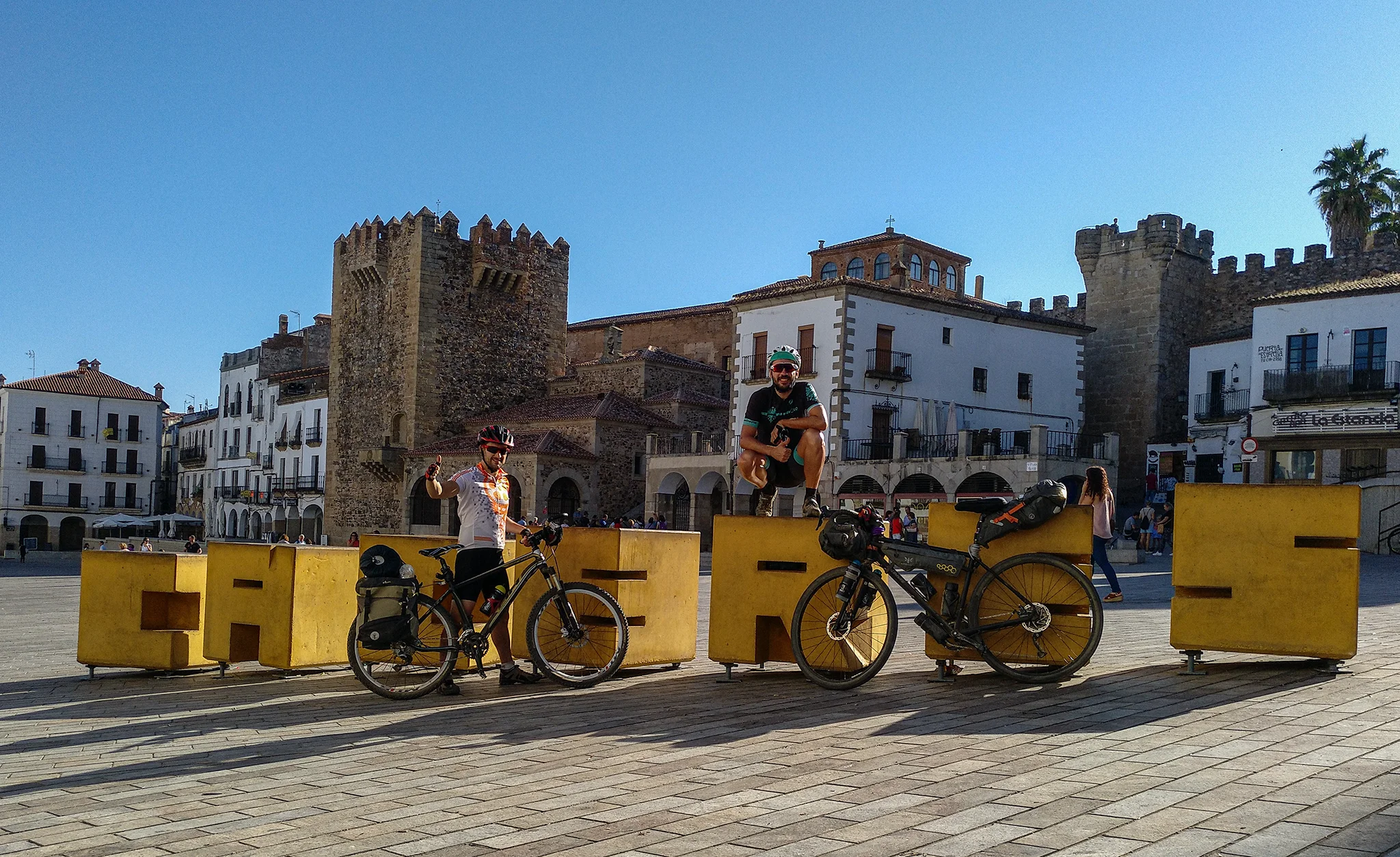
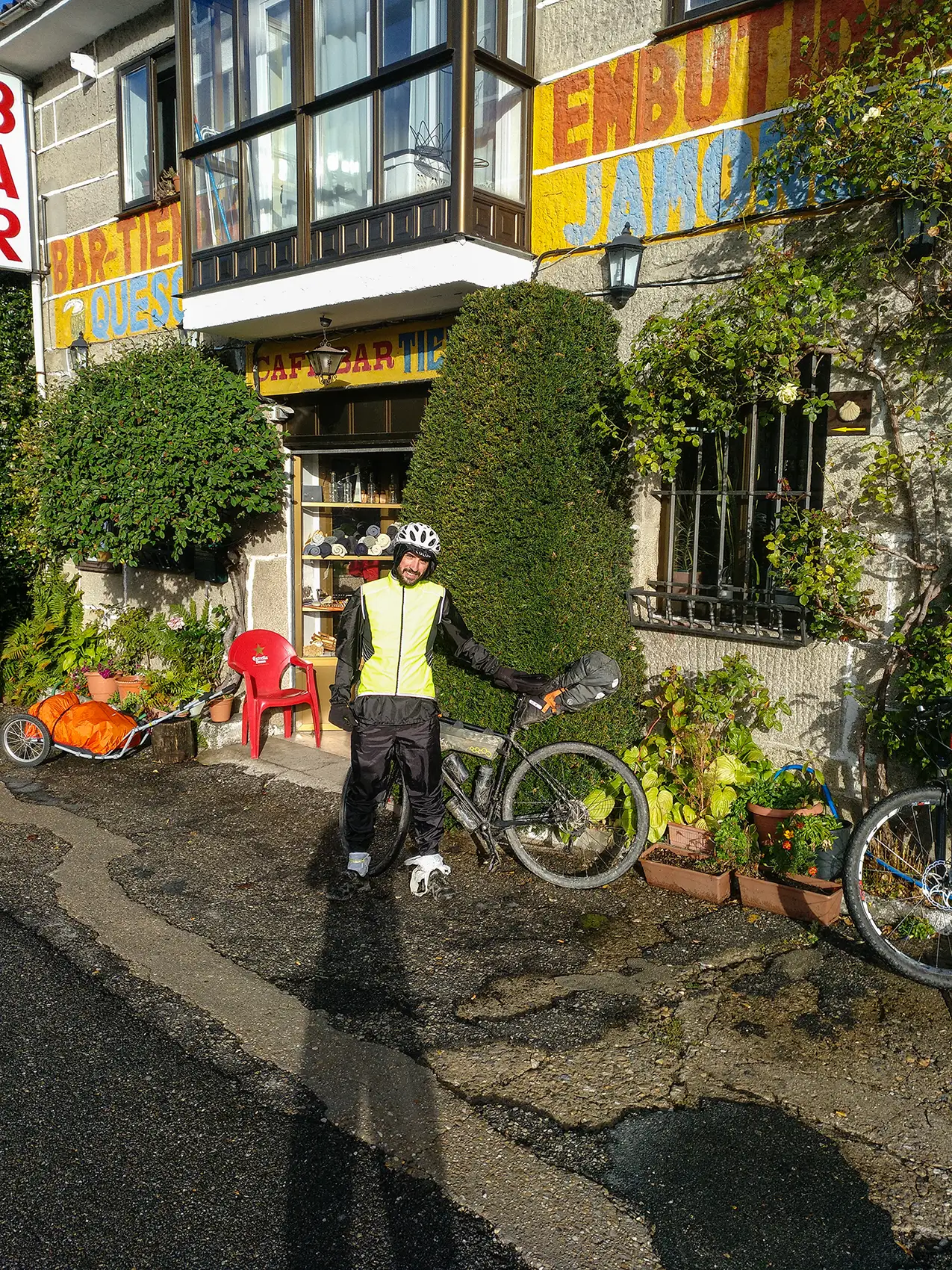
Taking the turn onto the Camino Sanabrés later on, so we wouldn’t repeat the final section we already knew from our previous Camino, was another good decision.
If I had to choose, I would probably recommend this route over the Camino Francés I had connected to from the Camino Jacobeo del Ebro in 2013. I remember it as far less crowded, less commercial, and with a sense of travel that suited me much better.
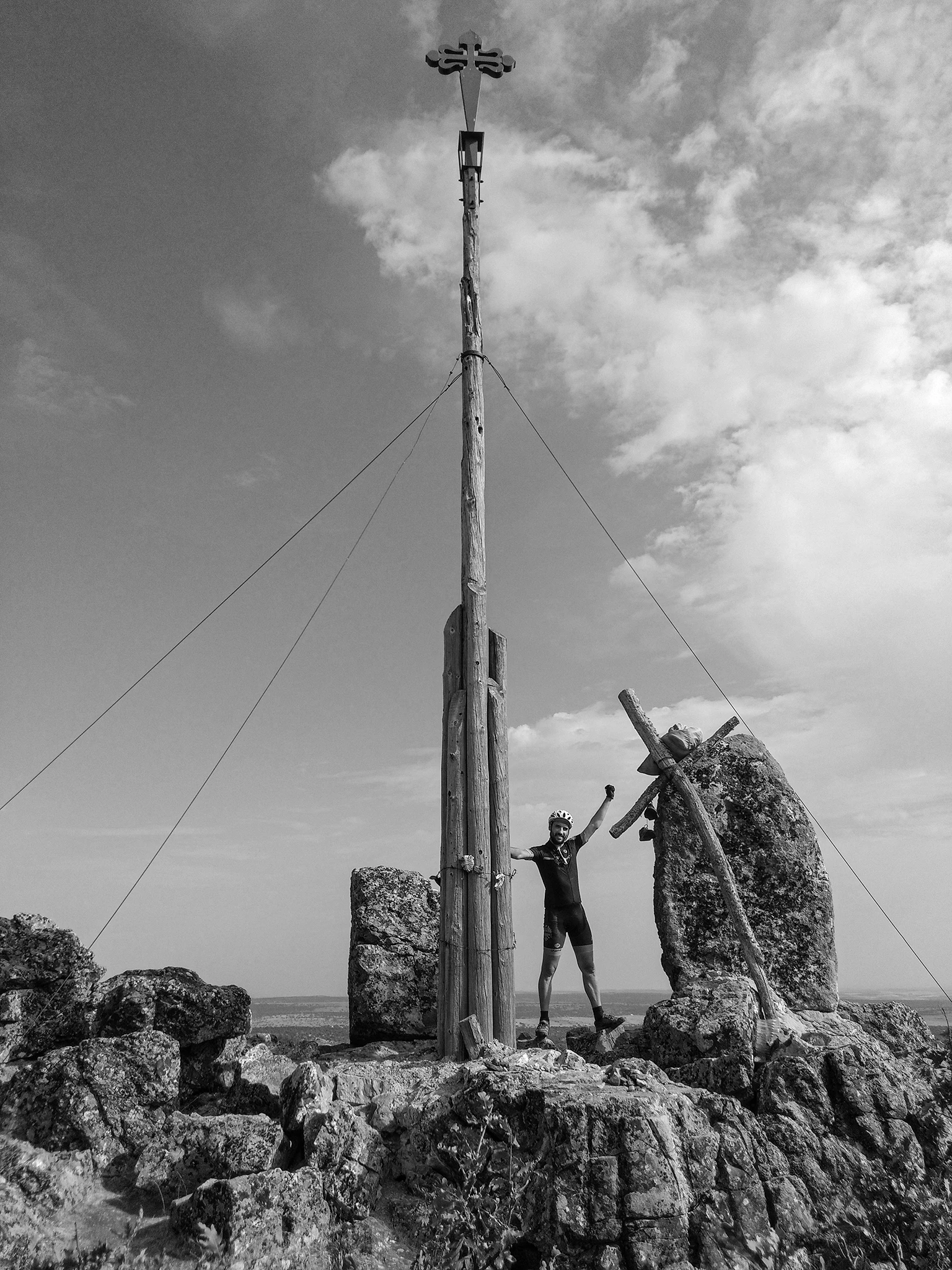
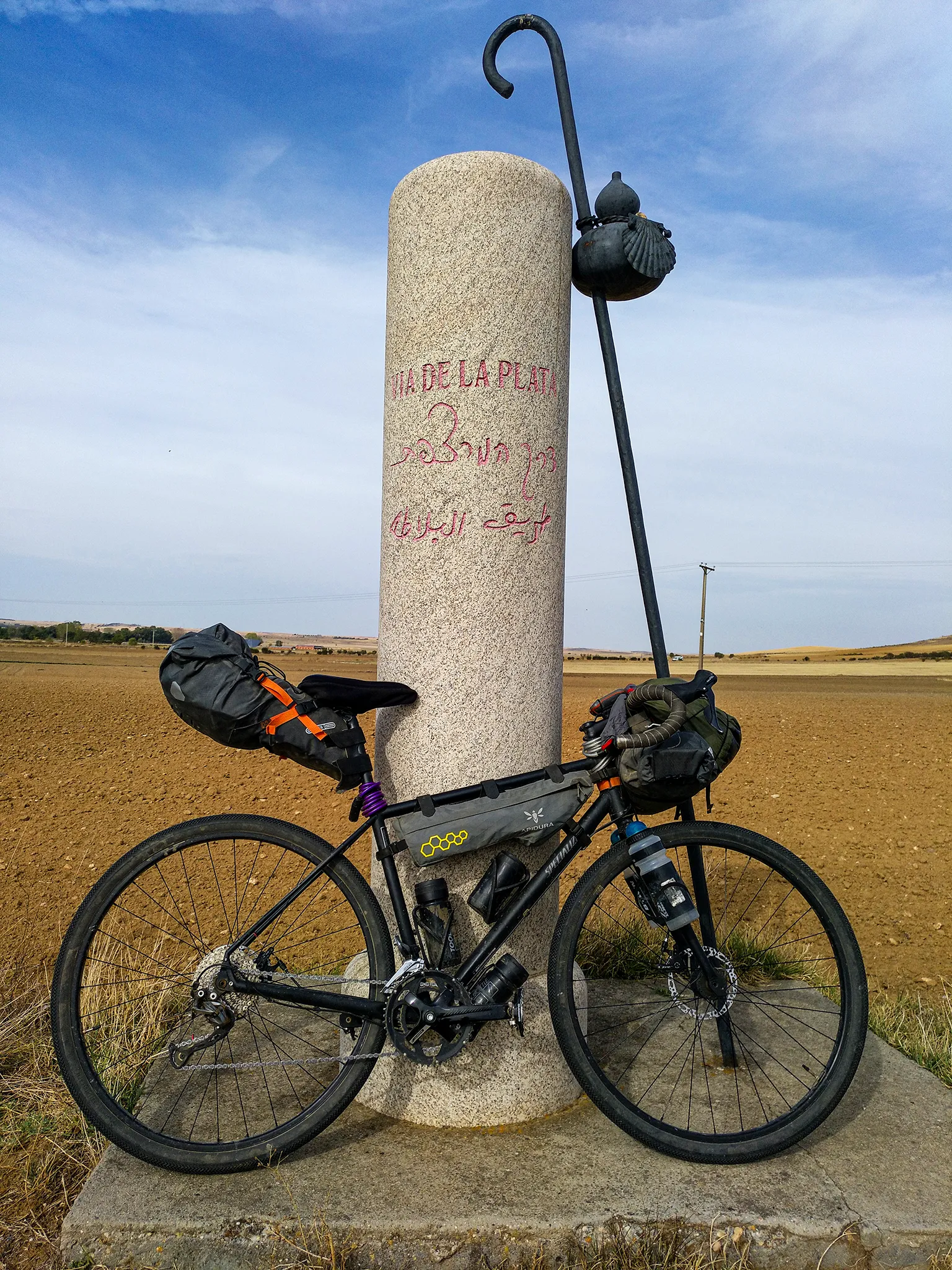
But it would still take me a few more years to understand what any of that had to do with being a dual pilgrim.
In 2023, another bicycle appeared.
A Brompton.
I bought it with Japan in mind, among other things. The year before, I had crossed Germany and Switzerland on a gravel bike and ended up touring Norway and the North Cape too, but for 2024 I imagined a completely different kind of adventure: travelling across Japan on a six-speed folding bike.
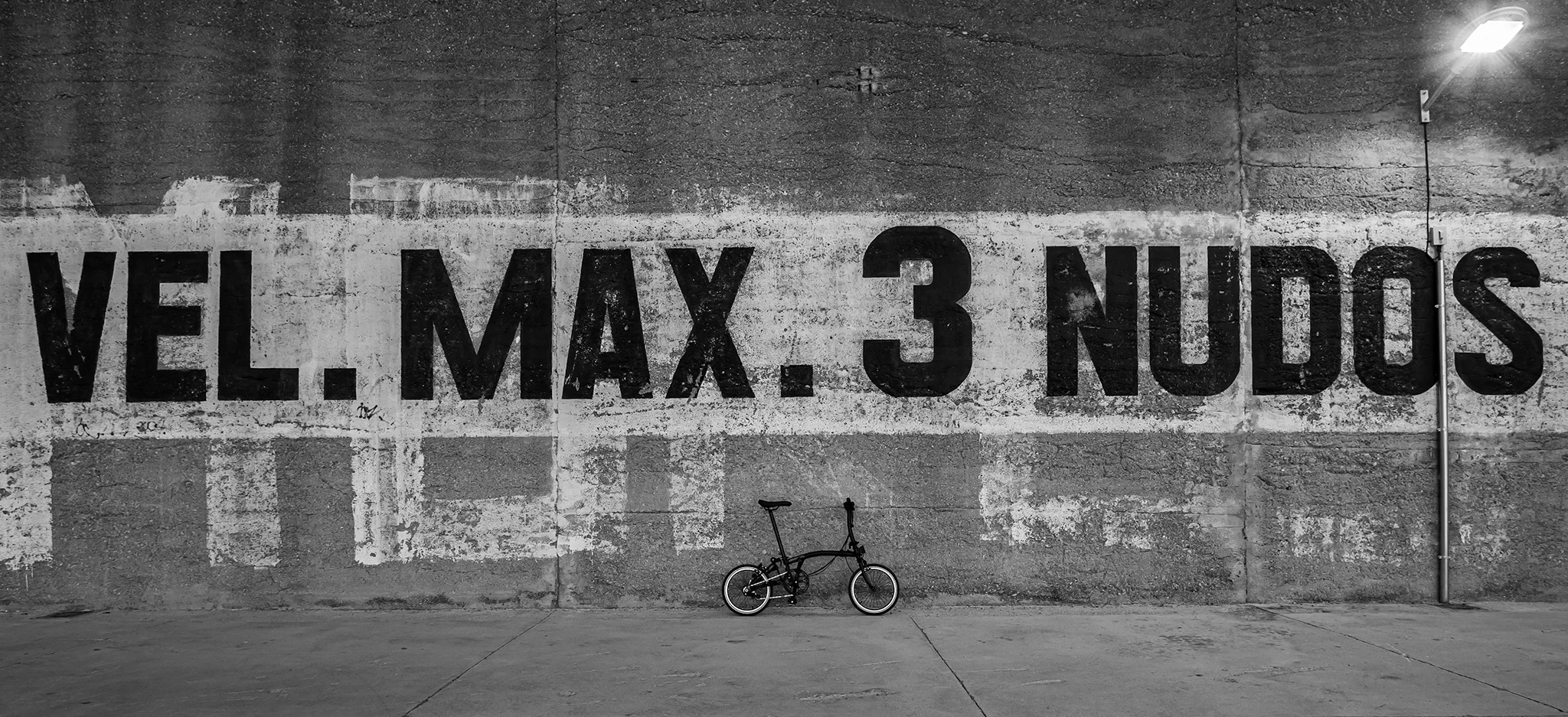
On paper, or at least in my head, the plan was brilliant.
Until I actually started planning the trip.
The more I read about Japan, the more doubts I had. Many of the shrines and places I wanted to visit were full of stairs. The Brompton’s twelve kilos, which in other contexts could mean freedom, began to feel like a burden. I would have to find somewhere safe to leave it constantly, or carry it folded to reach certain places.
But what finally dismantled the plan was a photograph.
I found it online.
A three-storey vermilion pagoda rose out of the vegetation. Behind it, an enormous waterfall dropped from the mountain, completing one of those images that are hard to believe exist beyond a screen.
I couldn’t stop looking at it.
From that moment on, one place moved above almost all the others on my itinerary: Nachi Taisha.
I already had a few locations firmly in mind (Kyoto, the Japanese Alps) and I had even considered keeping my time in Tokyo to a minimum, a city whose sheer scale made me feel more anxious than curious. But that photograph had placed a new destination on the map.
While looking into how to get there, I discovered something that ended up changing the entire trip.
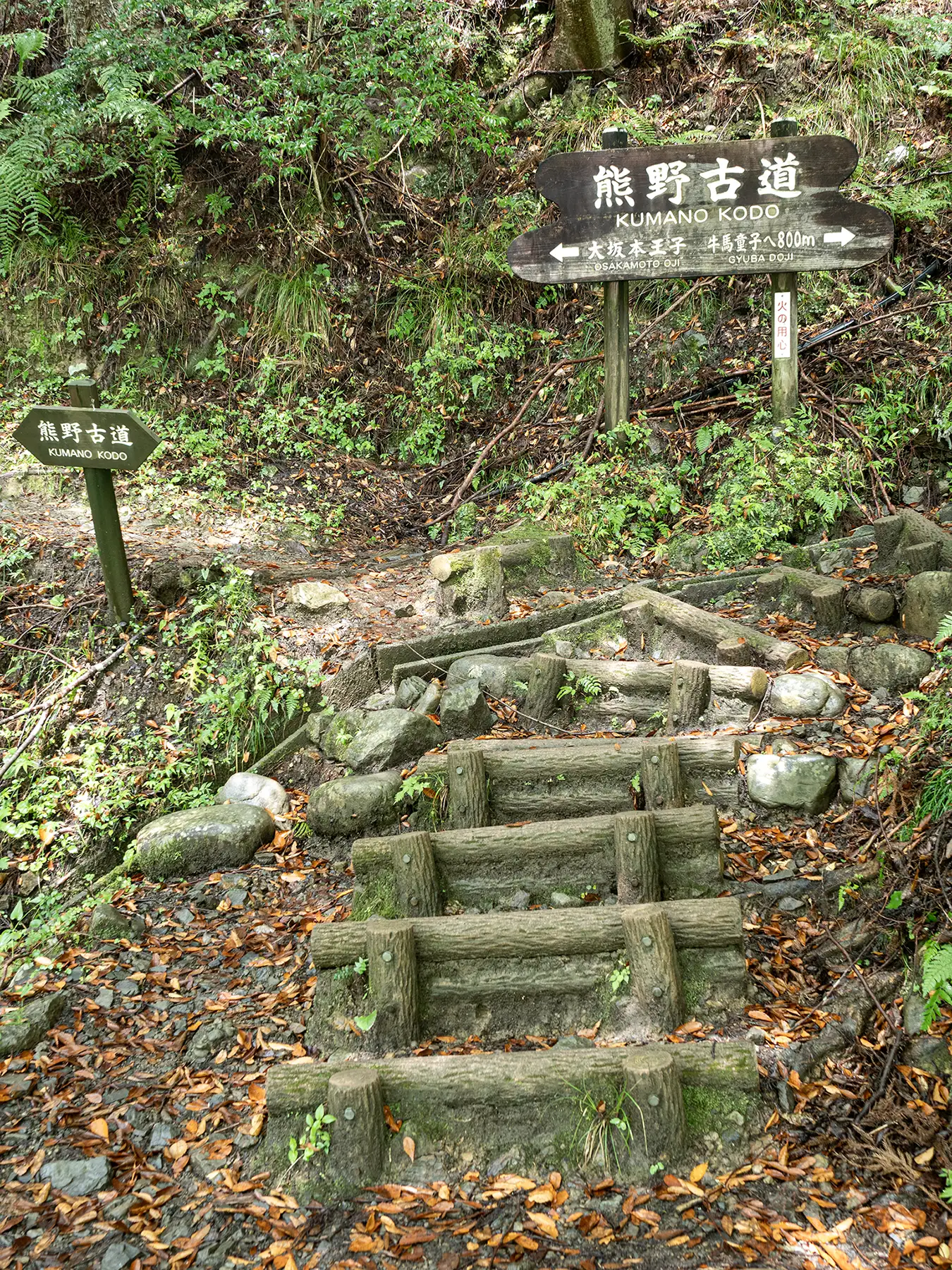
An ancient network of pilgrimage trails through the Kii Mountains, twinned with the Camino de Santiago. Two routes located almost at opposite ends of the world and yet linked by something exceptional: they are the only two pilgrimage routes inscribed as UNESCO World Heritage.
And there was one more detail.
The Kumano Kodo had to be walked.
It couldn’t have been clearer.
I also discovered that those who could prove they had completed the Camino de Santiago and then fulfilled the requirements in Kumano could register as Dual Pilgrims.
I had kept my Compostelas.
All that was left was to walk.
It may seem like a slightly absurd excuse to completely change the way I travelled after so many years of bikepacking.
It probably was.
But it was enough.
The Brompton stayed at home.
I chose the Nakahechi, the historic Imperial Route of Kumano. Of the different options, it seemed the most manageable choice for my first experience of this kind.
That idea of manageable lasted only a few hours.
As soon as I arrived in Osaka, I gave myself some time to acclimatise. To the jet lag, the August heat and, above all, the constant stream of new stimuli: colours, architecture, food, people and customs that had little to do with my own.
I wandered around the city without much hurry. I would have the chance to return and enjoy it properly at the end of the trip.
Then I travelled to Tanabe, one of the usual gateways to the Kumano Kodo.
There, one of those small coincidences happened that can make a journey begin even before you set off.
At the accommodation I met a Mexican traveller who had just walked the route in the opposite direction and was finishing his pilgrimage there. We had dinner together, shared experiences, plenty of laughs and a friendship that, even if only through Instagram, still continues.
The following day, my Kumano Kodo began.
It would be just four days.
Four days within a month-long journey through Japan.
At the time, I still didn’t know they would become a journey within the journey.
Following the recommendations I had found while preparing the trip, I booked accommodation along the route in advance. There are no pilgrim hostels there, and the villages are so rural that there is very little tourist infrastructure. That led me to sleep in traditional Japanese homes, on futons, eat whatever the owners prepared and, for a few days, step into an everyday life I probably would never have experienced by travelling any other way.
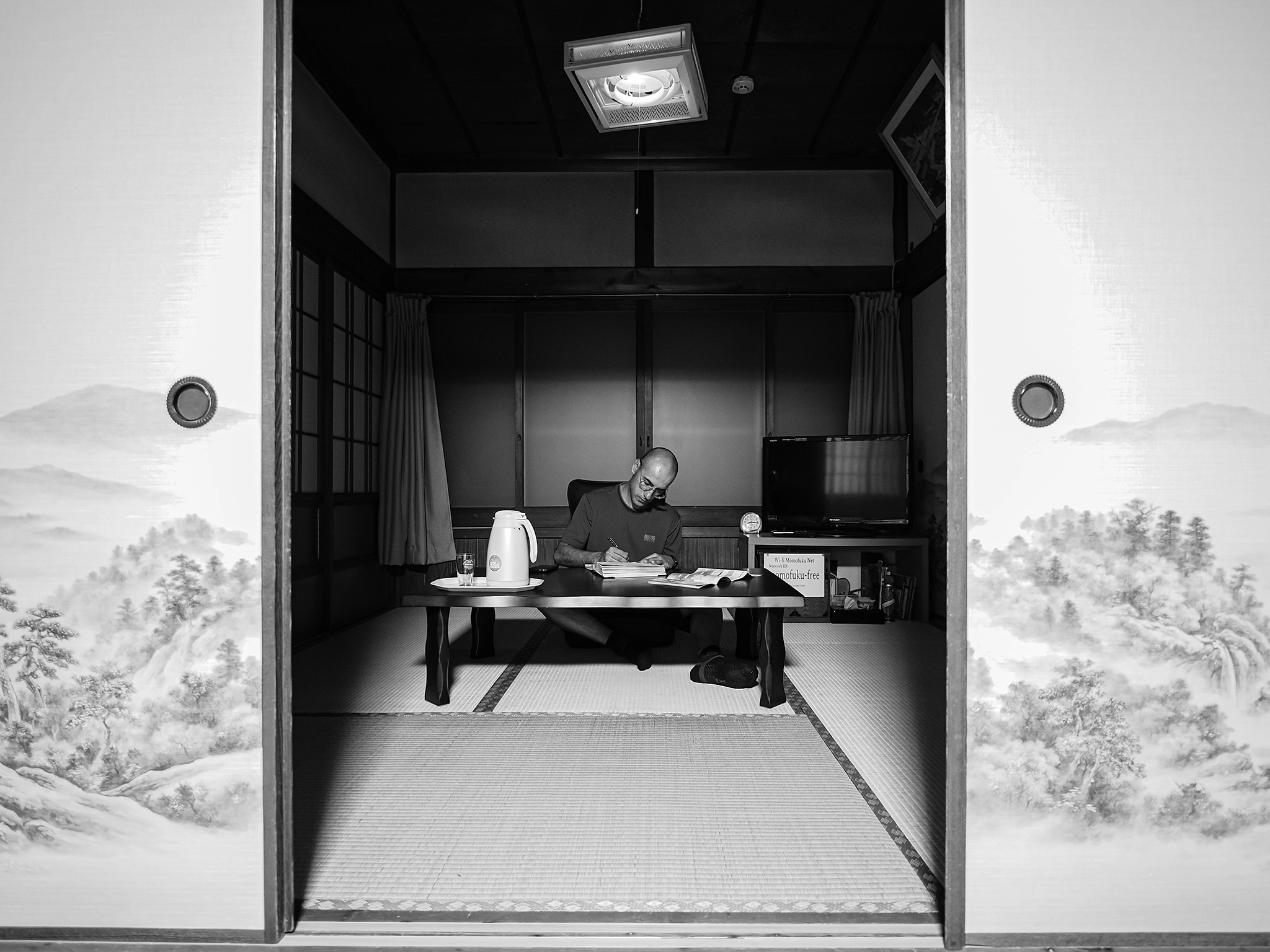
Curiously enough, the language ended up mattering very little.
In that part of Japan, I hardly met anyone who spoke English. Over dinner, we relied on gestures, isolated words and all those improvised tools that appear when two people genuinely want to understand each other.
And somehow, we did.
Many of those dinners ended in laughter.
Then there was the trail.
I had always thought walking the Camino de Santiago was incredibly hard. On a bicycle, there is a small advantage that perhaps you only appreciate once it is gone: the bike carries a good part of the weight. Your legs work, of course, but you can stop pedalling on a descent and still keep moving forward.
On foot, there is no such respite.
Every metre is yours.
I didn’t fully realise that until a few hours after starting the Kumano Kodo.
The first stamps came at the small ōji scattered along the trail, ancient sacred sites woven into the route. With a brand-new pilgrim credential and camera in hand, for those first few hours I was probably the happiest person in the world.
I was taking photos left, right and centre.
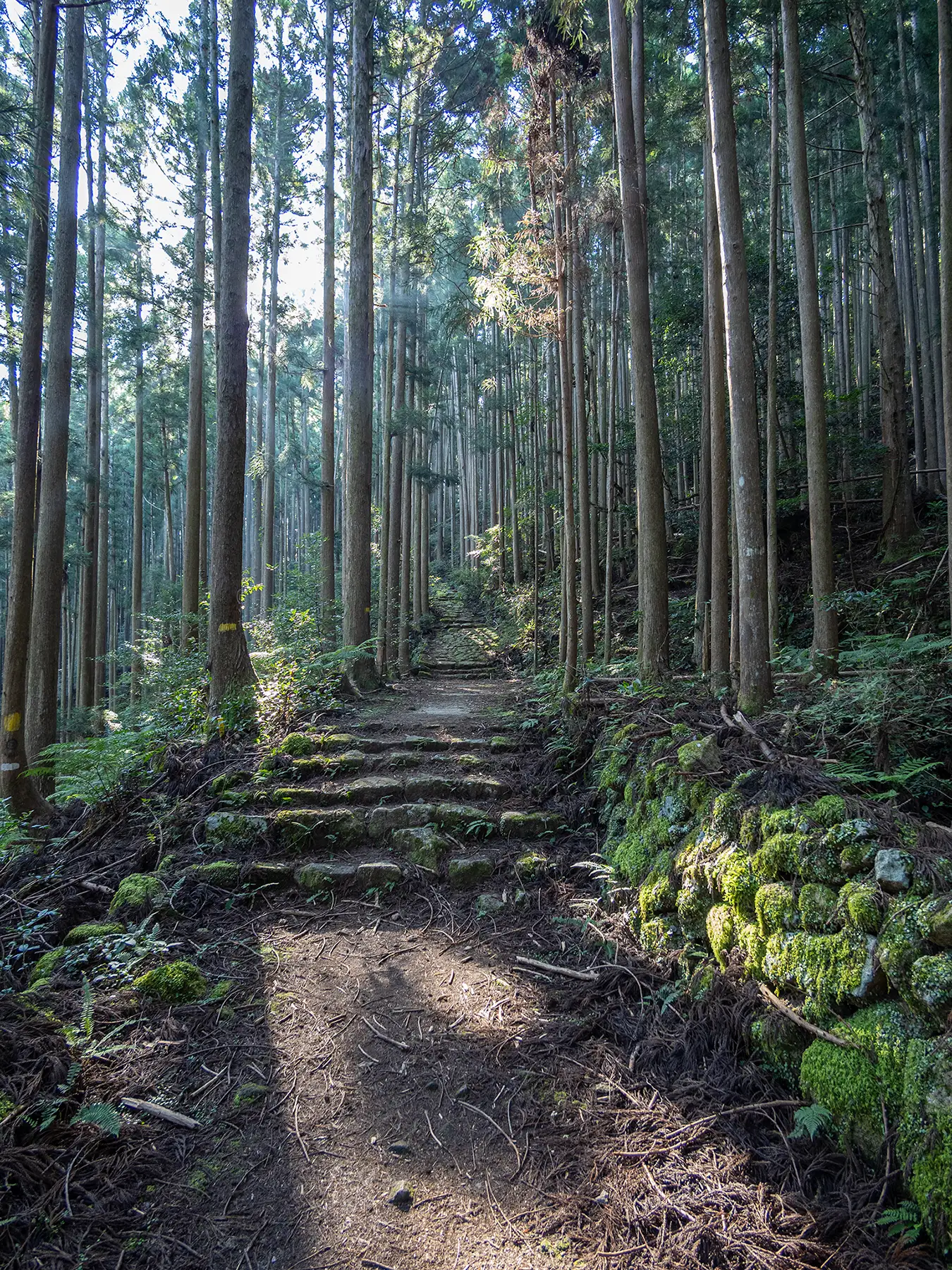
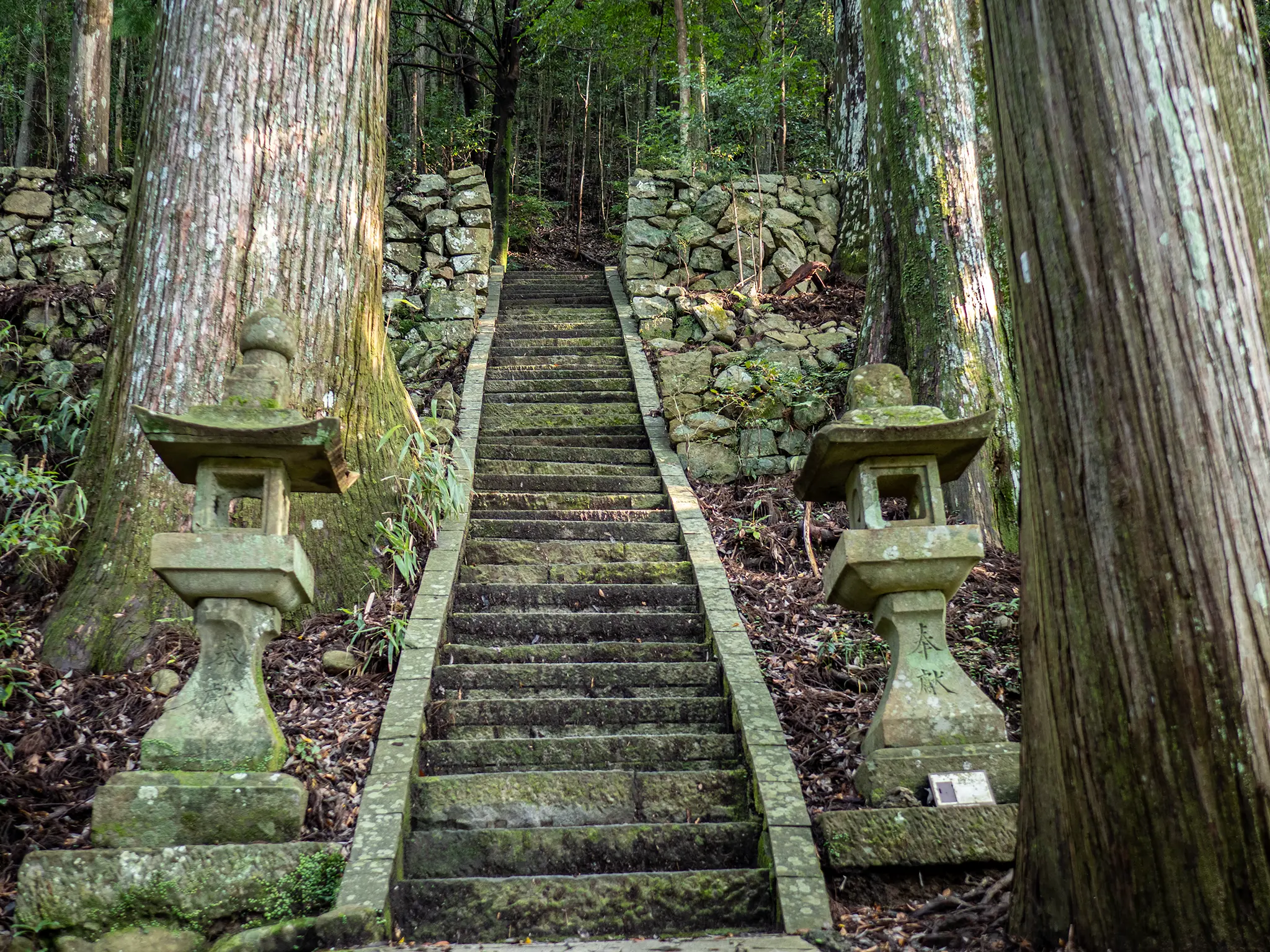
Forests, trails, tiny shrines, details I didn’t understand and which fascinated me precisely because of that.
Until the trail started looking upwards.
And kept looking upwards.
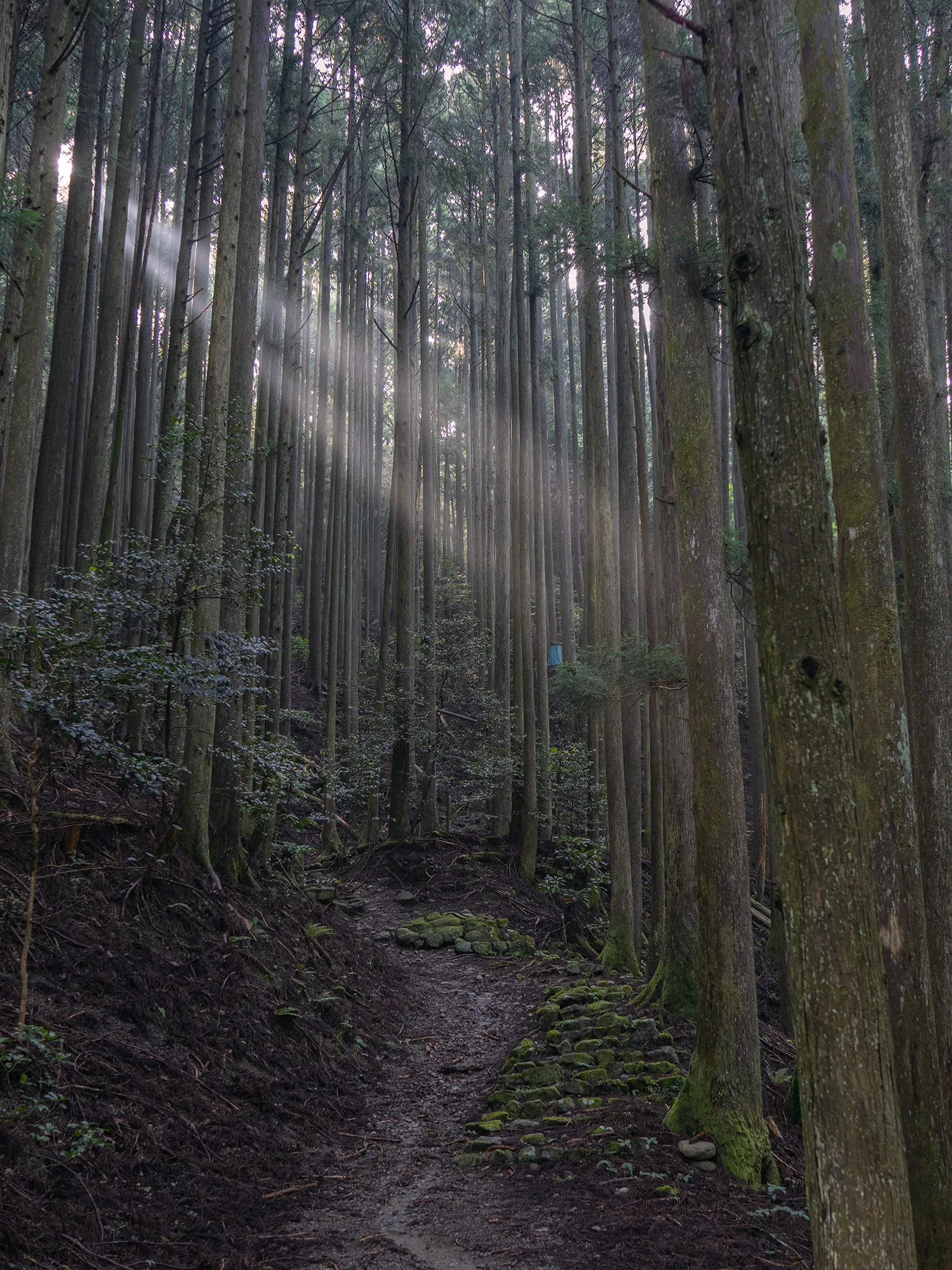
The elevation soon put everything into perspective. The climbs were compounded by the heat and a level of humidity that, even for someone used to the Mediterranean coast, was difficult to cope with.
Fortunately, the landscape had a certain ability to make everything else disappear.
At least for a few minutes.
The nights were the perfect counterpoint.
Arriving at the house where I was going to sleep and finding one of those Japanese baths waiting for me became a small oasis at the end of each day.
The ritual was completely different from my own.
Sitting on a small stool in front of a mirror, washing yourself and rinsing off there before stepping, completely clean, into a bathtub filled with water so hot that, at first, it is difficult to understand exactly where the relaxing part is supposed to be.
Until you get in.
And then you understand.
It is surprising how easily human beings can adapt to other people’s customs.
Especially when they are as pleasant (or even more so) than your own.
Then came the food, the gestures, the occasional cup of sake, the laughter and, finally, the futon.
And the next day, the trail again.
I had also read that the weather in Japan could change with remarkable speed.
Reading about it and actually experiencing it turned out to be very different things.
August is rainy and typhoon season, and on the second and third days of my pilgrimage I had to walk through storms unlike any I had ever seen.
It was not one of those summer showers that brings relief from the heat.
This was something else entirely.
Thunder echoed above me while so much water poured down that, at times, I could barely make out what lay a few metres ahead. The intensity could ease for a while and then, suddenly, return with unexpected violence.
The trails stopped looking like trails.
They became small rivers.
And my feet spent hours inside completely soaked shoes.
By the end of the first of those days, I had sores on almost every toe.
That night, I thought my Kumano Kodo might have ended there.
There was no great heroic decision.
I treated the wounds, bandaged what needed bandaging and went to sleep.
I would decide in the morning.
And in the morning, my feet responded.
With my toes bandaged, I went back out into the rain.
Curiously, I could walk without pain.
So I kept going.
At the end of that day, I reached Kumano Hongu Taisha.
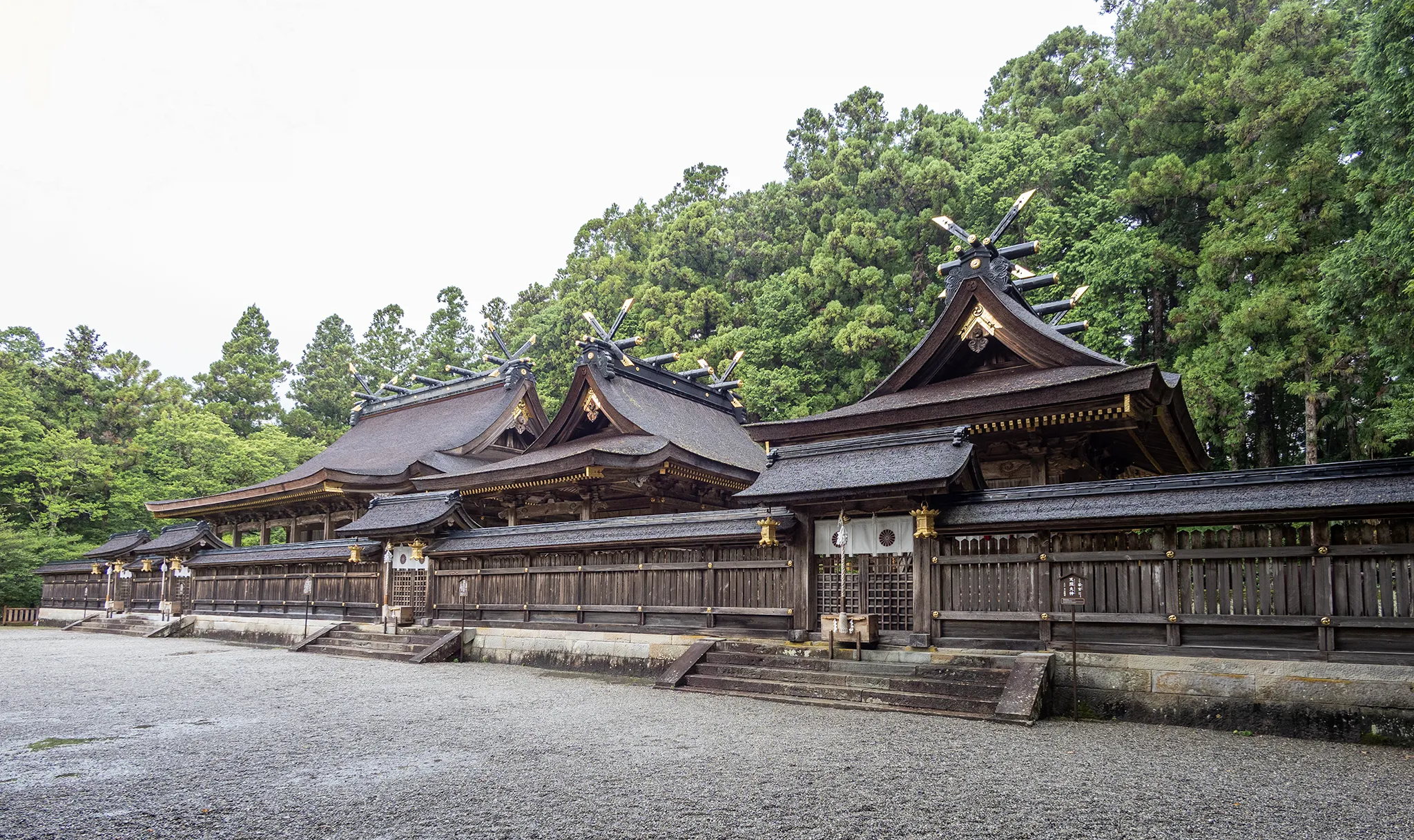
There, I was able to prove that I had completed the Camino de Santiago, fulfil the requirements of the Kumano Kodo and officially register as a Dual Pilgrim.
Then came something I hadn’t expected to experience quite so intensely: the taiko ceremony.
They explained how I should strike the great sacred drum, and I took part in that small ritual reserved for those who had completed both pilgrimages.
I’ve never been particularly good at knowing how to react when other people enthusiastically celebrate something I consider a personal achievement.
It makes me feel slightly self-conscious.
Their joy made me blush.
But after several days of sharing their homes, their food, their customs and the occasional cup of sake, it no longer felt quite so unfamiliar.
Perhaps something had already begun to change.
The curious thing was that, officially, I could now consider myself a Dual Pilgrim.
But my journey was not over.
At least, mine wasn’t.
There was still Nachi.
The credential said one thing.
The photograph that had brought me there said another.
For me, the pilgrimage would end when I was standing in front of that pagoda and that waterfall which, months earlier, had appeared on a screen and ended up changing the course of an entire journey.
So I faced the final day with my shoes still damp from the day before and several toes bandaged.
It was hard again.
But this time the rain gave me much more of a break.
And I kept walking.
By then, I also carried with me the small satisfaction (probably rather childish) of having checked the official website and seen my name listed among that group of Dual Pilgrims.
I felt like a child with a new pair of shoes.
Although, in my case, the shoes were soaked and my feet covered in cuts.
But the real reward was still to come.
After several days of forests, elevation, heat and storms, the weather decided to give me a break.
When I arrived, the sun came out.
And there it was.
The image I had seen so many months before.
The pagoda.
The mountain.
And behind it, plunging down from its slopes, Nachi Falls.
It took my breath away.
I had travelled all that way because of a photograph and, as someone passionate about photography, for months the first thing I had imagined was being able to make my own version of that image.
I did.
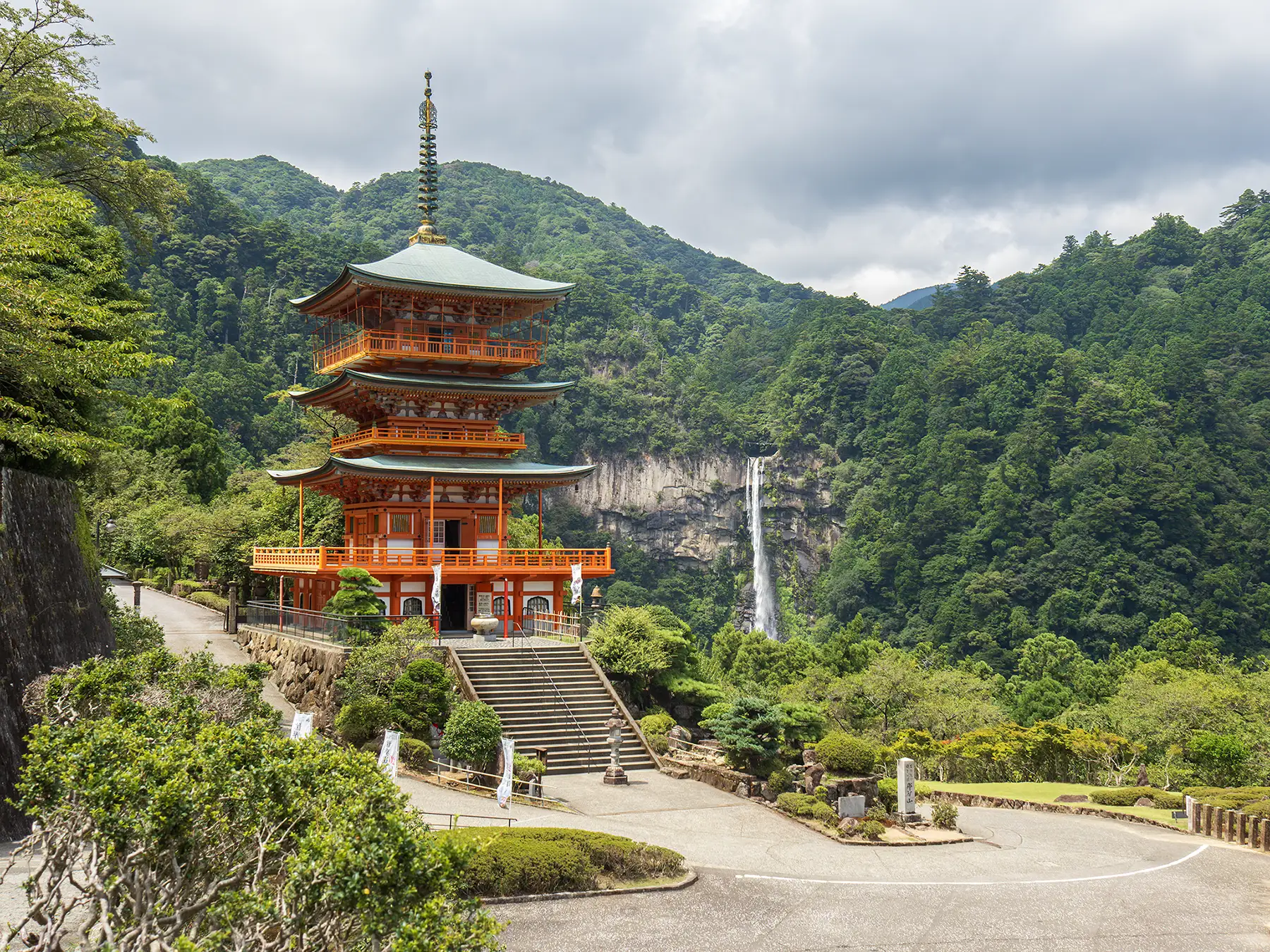
And I like it a lot.
But no photograph can really compete with the feeling of arriving on foot at the place that, one day, managed to change all your plans.
That image had been the beginning.
Standing in front of it was the end.
Or so I thought.
In just four days, I had experienced an extraordinary journey within another journey.
I still had almost all of August ahead of me and a large part of Japan left to discover. For a moment, I even wondered whether starting with landscapes that wild might make everything else feel underwhelming.
Fortunately, Japan quickly proved otherwise.
But something had changed.
Until then, the way I travelled had been closely tied to a bicycle. Gravel, bikepacking, self-sufficiency. Years spent looking for trails, carrying what I needed and learning how to manage far from home.
Travelling by bicycle still feels deeply liberating to me.
That hasn’t changed.
What changed was realising that perhaps, for too long, I had confused the way I travelled with the tool I used to do it.
All the experience I had accumulated over so many years on a bicycle had not stayed at home with the Brompton. It had travelled with me.
The ability to improvise. To adapt. To keep moving when things do not go as planned. To be alone without necessarily feeling lonely. To accept that a route can change at any moment.
All of that fitted into a backpack too.
Perhaps that was the real meaning of becoming a Dual Pilgrim.
Not simply having completed two pilgrimages separated by thousands of kilometres.
But also discovering two different ways of moving forward.
And I’ll tell you a secret.
Ever since then, I’ve had the idea of one day creating something similar to Deriva Lenta Slowbiking, but on foot. Quiet paths, a backpack on my shoulders and enough time to get a little lost along the way.
Who knows.
Deriva Lenta had been in my head for many years, and this year I was finally able to give it shape. Maybe one day this will become another of its variations.
The rest of that month in Japan belongs to another story. If you’re curious, part of it lives on my street photography Instagram profile.
Not here.
Here there is only room for quiet paths and magical routes.
And the Kumano Kodo was both.
Would you like to follow Deriva Lenta’s journey?
Deriva Lenta is built from routes, stories, photographs and thoughts that find their place along the way.
If you’d like to follow the project and hear about it whenever there’s something new worth sharing, the slowletter is the most direct channel.



Leave A Comment